



What Proper Protection Should You Wear While Painting?

When it comes to painting, proper protection is essential. Whether you are spray painting a wall, cabinet doors, or any other surface, it is important to wear the right protective gear. However, it's important to remember that it involves inhaling potentially hazardous substances, such as paint fumes and particles. Thus, it's crucial to take proper precautions to protect yourself while spray painting.
Wear a Respirator Mask
For those of us who value breathing, a respirator mask is a must-have. A respirator mask is a type of mask that filters out harmful particles and ensures that you'll be able to enjoy the fresh air... or at least as fresh as the air in your workshop can be! When you wear a respirator mask, you'll be able to breathe in clean air and reduce the risk of inhaling paint fumes and other toxic substances. It's recommended to use a respirator mask with a particulate filter, which is designed to capture the tiny particles that are produced when you spray paint.
When selecting a respirator mask, there are a few things you should consider. First, make sure the mask fits your face snugly and comfortably. A poorly fitting mask can be uncomfortable to wear and can also let harmful particles into your lungs. Secondly, check the rating of the mask. Respirator masks are rated by the National Institute for Occupational Safety and Health (NIOSH) for their ability to filter out harmful particles. Look for a mask with a rating of N95 or higher, as this will provide adequate protection for spray painting.
So, if you want to avoid having a cough that makes you sound like Darth Vader, remember to use a respirator mask with a particulate filter when spray painting.
Eye Protection
When spray painting, it is important to wear eye protection that provides adequate coverage and is designed specifically for this task. We want your eyes to be watering from happy tears after your work is done (not from paint particles). If you want to see your work clearly, here are some recommended types of eye protection to consider:
- Safety goggles: Safety goggles are a type of eye protection that fully covers the eyes and forms a seal around the eyes to prevent paint particles or fumes from entering. Look for goggles that are specifically designed for spray painting, and ensure that they are approved by a recognized safety standards organization such as the American National Standards Institute (ANSI).
- Full-face respirator: A full-face respirator is a type of mask that covers the entire face, including the eyes, and filters out harmful fumes and particles. This type of respirator is especially important if the paint you are using contains toxic or harmful chemicals.
- Face shield: A face shield is a transparent shield that protects the face and eyes from paint splatters or overspray. Face shields are often used in combination with safety goggles or a respirator to provide additional protection.
Regardless of the type of eye protection you choose, it is important to ensure that it is properly fitted and worn according to the manufacturer's instructions. Always follow proper safety precautions when spray painting to protect your eyes and ensure a safe working environment.

Wear the Right Clothes
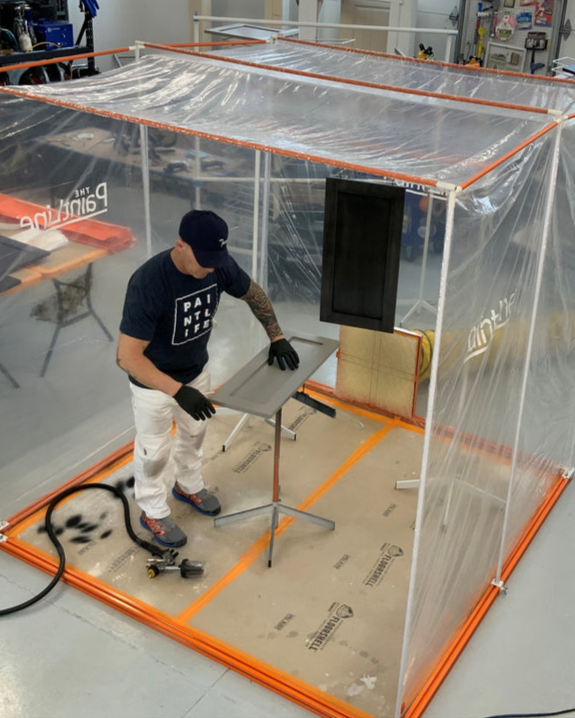
Wear long-sleeved shirts and pants to cover your skin and avoid contact with the paint. Additionally, wear gloves to protect your hands and prevent the paint from coming into contact with your skin. If you're spray painting in a confined space or for an extended period, you may want to wear protective eyewear to prevent particles from getting into your eyes. But seriously, nobody wants to walk around with blue hands and a face full of overspray.
Work in a Well-Ventilated Area
When working with spray paint, it's crucial to have good ventilation to prevent the buildup of fumes and particles in the air. If the air isn't adequately circulated, you may inhale harmful substances, which can cause respiratory problems, dizziness, or even unconsciousness. And you surely don’t want to pass out on your new client’s freshly painted cabinet doors.
In a perfect world with perfect weather, spray painting should be done outdoors where there is plenty of fresh air. However, that’s not always realistic due to wind, humidity, rain, bugs, falling leaves and other natural particles floating around. If you’re restricted to working indoors, you can use an exhaust fan or place a box fan in a window to draw fresh filtered air into the room and push out fumes.
It's also important to be aware of the direction of the air flow when working indoors. Position yourself and the spray painting equipment in such a way that the air flows away from you and towards an open window or door. This will ensure that the fumes and particles are carried away from your breathing zone and out of the room.
Follow the Manufacturer’s Instructions
We know reading long, boring directions can be difficult and many of us like to skip that step to save some time. But we bet you could have put that IKEA furniture together faster by reading the instructions first, right? So trust us when we tell you that a critical precaution to take is to follow the manufacturer's instructions when using spray paint. Different types of spray paint may require different safety measures, so it's important to read and follow the instructions carefully. For example, some spray paints may require a specific type of respirator mask, while others may recommend additional safety equipment.
In the end, spray painting can be a fun activity, but it's important to remember the potential risks involved. If you want to protect your skin, it’s important to protect yourself while spray painting. Be sure to wear a respirator mask with a particulate filter, wear the right clothes, and protect your eyes. Make sure you're working in a well-ventilated area, follow the manufacturer's instructions, and take the necessary precautions, even if it takes a little longer to get started.