



Paint Booth vs. Open-Air Spraying: Which Is the Better Choice for Your Finish?

If you spray finishes for a living, you already know how much the environment can make or break a job. You can have the right spray gun, the perfect settings, and years of experience, and still end up sanding out dust nibs or fixing overspray because the wind kicked up or debris floated into your clear coat.
It’s something most painters, cabinet refinishers, and jobsite contractors deal with daily: Should you spray in the open air, or is it worth using a paint booth?
Both methods have their place. Open-air spraying is common and convenient while paint booths offer more control and consistency. The right choice often comes down to the type of work you do, the level of finish you want to deliver, and how much time you’re willing to spend on prep and cleanup.
Finish Quality: Consistency vs. Chance
If you talk to experienced finishers, most will agree that environment plays a huge role in results.
Open-air spraying can absolutely produce great finishes, but it often depends on timing and conditions. A still, clean day might go perfectly. The next day might mean sanding out nibs between every coat.
That unpredictability is what slows crews down.
When you spray inside a booth or enclosed area, you typically deal with fewer airborne contaminants. That often means:
- Fewer dust nibs and imperfections
- Less sanding between coats
- Fewer re-sprays
- More consistent results from project to project
 Efficiency on the Jobsite
Most of the time spent spraying isn’t actually spraying, it’s prepping and cleaning up.
With open-air setups, a lot of effort goes into masking floors, walls, windows, and anything that could catch overspray. Afterward, there’s often extra cleanup or touch-up work.
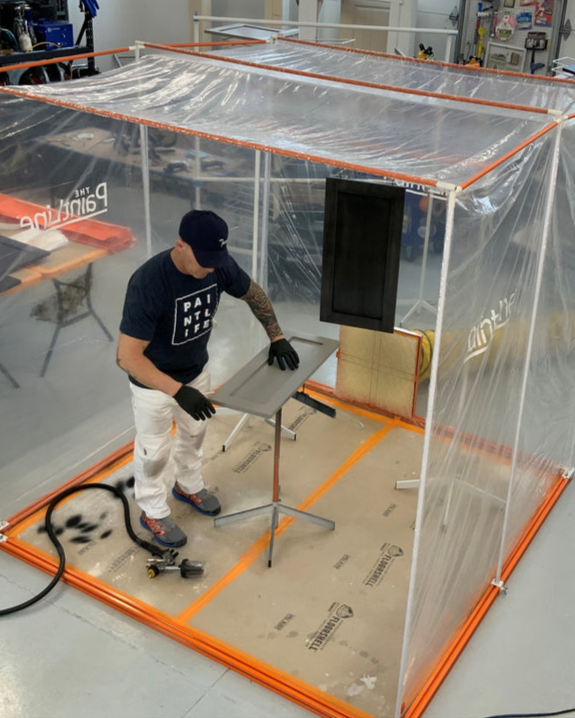
A contained spray space can simplify that process. Instead of protecting everything around the project, you’re protecting the project from everything else. Investing in solutions that are quick and easy to set up, like the Portable Jobsite Spray Booth (PJSB) saves a lot of time and headache during each job by minimizing the effort needed for prep and clean up.
Many painters find this helps:
- Reduce masking time
- Keep overspray contained
- Speed up cleanup
- Stay organized on busy jobsites
Over the course of a week or month, those small time savings add up.
Overspray and Workspace Control
Overspray is easy to underestimate until it becomes a problem. Fine particles can travel farther than you think, settling on cars, tools, landscaping, or finished surfaces nearby. That’s not just messy, it can create liability on client properties.
Open-air spraying makes overspray harder to manage, especially outdoors or in shared spaces.
Using a booth or enclosed spray area helps keep everything contained to one predictable footprint. That control can make it easier to work confidently, especially in tighter or more sensitive environments.
 Professionalism and Presentation
While clients may not know the technical differences between spraying methods, they do notice organization and process. A defined spray area or booth tends to look intentional and professional - like finishing is a system, not an improvised setup.
It can subtly communicate:
- Care for their property
- Attention to detail
- A cleaner, safer workspace
- A higher-end approach to finishing
Those impressions matter, especially when you’re doing interior work in someone’s home or business.
So, Which Is Right for You?
There isn’t a one-size-fits-all answer. Open-air spraying still makes sense for certain tasks: exterior projects, quick jobs, or situations where mobility and speed matter most.
But for many pros doing detailed finish work, cabinetry, doors, or repeat production, having a controlled spray environment can make life easier. Fewer defects, less masking, and more predictable results often mean less stress and better margins.
At the end of the day, it comes down to how much control you want over your process.